By Ajit Krishna Dasa
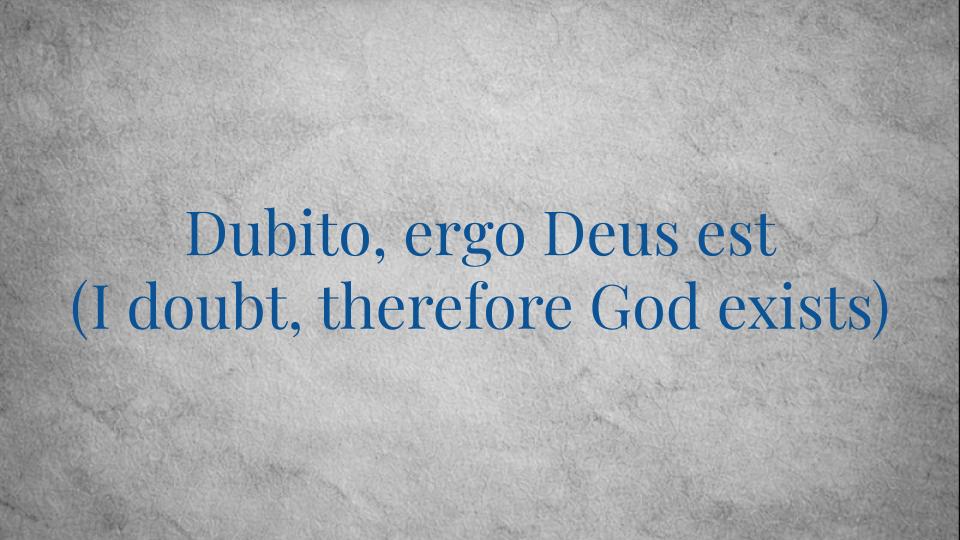
In the contemplative journey of epistemology, doubt serves not merely as a cognitive disturbance but as a profound engagement with the metaphysical inquiry into truth. In this presentation my aim is to explore doubt within the framework of Vaisnava presuppositionalism, thereby enriching both philosophical dialogue and spiritual insight. From the Vaisnava perspective, the process of doubting inexorably leads back to the Supreme Reality, Lord Krishna. This discourse explores how the act of doubting fundamental truths, such as the existence of God, paradoxically affirms His existence through the indispensable elements of truth, logic, and the uniformity of nature—all of which are manifestations of Krishna’s divine essence.
Truth as Divine Reality
Doubt inherently entails the evaluation of propositions against the criterion of truth. In Vaisnava thought, truth transcends mere conceptual abstraction; it is embodied dynamically by Lord Krishna, identified in the Bhagavad-gita and Srimad-Bhagavatam as the ultimate truth (“satyam param dhimahi”). Thus, truth is not static or impersonal but an active expression of the divine. The presupposition of an absolute standard of truth, as provided by Krishna, underpins the very possibility of meaningful doubt; devoid of this divine benchmark, the notion of truth would degenerate into relativism, rendering doubt philosophically untenable.
Logic as a Reflection of Divine Order
The application of logic in the process of doubting is not merely a human tool but a reflection of the cosmic order instantiated by Krishna. As declared in the Bhagavad-gita, Krishna is the source of intelligence in the intelligent, suggesting that logical principles are derivative of His divine intelligence. This implies that logic, far from being a secular construct, is a divine attribute, permeating human reason with universal and invariant laws. Without this divine underpinning, logic would devolve into arbitrary conventions, lacking the necessary universality and immutability required for rational inquiry.
Uniformity of Nature as an Expression of Divine Consistency
The assumption of nature’s uniformity, crucial for the act of doubting, presupposes a consistent and ordered universe. Within Vaisnava philosophy, this consistency is governed by the laws of karma and dharma, which are themselves manifestations of Krishna’s will. This theological framework posits that the predictability essential to scientific and philosophical endeavors is a direct consequence of divine ordinance. Absent this divine governance, the expectation of uniformity would lack any substantive justification, reducing empirical and deductive methodologies to speculative endeavors.
Conclusion
Engagement in doubt, whether concerning mundane or transcendental matters, ultimately validates the presence of Krishna as the foundational reality. The argument “Dubito, ergo Deus est” in the Vaisnava context thus reveals a paradox: doubting the existence of God, far from undermining His reality, actually reinforces it by depending on the metaphysical constructs that He sustains. Without this divine foundation, the entire edifice of doubt would collapse under the weight of its own philosophical insufficiencies.
 Ajit Krishna Dasa