Srila Prabhupada on the Logic of the Blind and the Lame

By Ajit Krishna Dasa

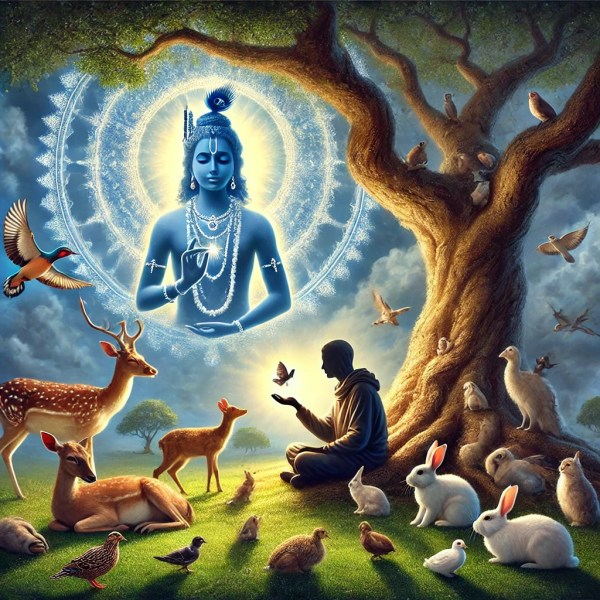
In his teachings, Srila Prabhupada sometimes invoked the andha-pangu-nyaya, or “the logic of the blind and the lame,” to illustrate how two limited parties can achieve success by cooperating. Through this metaphor, he conveyed the power of synergy, where limitations become strengths when aligned with Krishna consciousness. Here’s how Srila Prabhupada used this analogy and why it is a valuable tool in preaching Krishna consciousness.

Continue reading “Srila Prabhupada on the Logic of the Blind and the Lame”

Srila Prabhupada on the Logic of the Nipples on the Neck of a Goat.

By Ajit Krishna Dasa

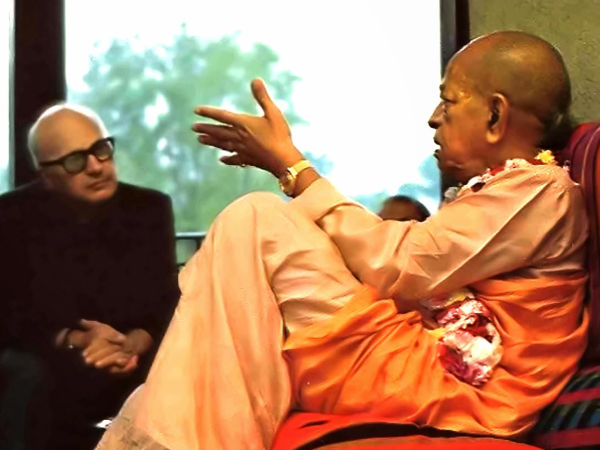
Srila Prabhupada often employed traditional Indian logic and analogies in his preaching to help his audience grasp profound philosophical concepts. One such analogy he used is the Aja-gala-stana-nyaya, or the logic of the nipples on the neck of a goat. In Sanskrit, “aja” means “goat,” “gala” means “neck,” and “stana” refers to “nipples.” This analogy points out the uselessness of something that appears functional but serves no real purpose, like the nipples on a goat’s neck, which do not provide milk.

Continue reading “Srila Prabhupada on the Logic of the Nipples on the Neck of a Goat.”

Srila Prabhupada on the Use of Logic in Krishna Consciousness

By Ajit Krishna Dasa

Srila Prabhupada held a balanced view on the use of logic in Krishna consciousness, recognizing both its value and its limitations. He believed that logic can serve as a useful tool in preaching and understanding spiritual truths, but cautioned against relying on it exclusively or misusing it in ways that could hinder one’s spiritual progress. His stance can be understood by examining both the positive role of logic and the pitfalls of illogical thinking, as well as the dangers of over-reliance on logic.

Continue reading “Srila Prabhupada on the Use of Logic in Krishna Consciousness”

Bursting the Bubble: The Froglike Thinking of Secular Scientists

By Ajit Krishna Dasa

Srila A.C. Bhaktivedanta Swami Prabhupada, the founder-acharya of the International Society for Krishna Consciousness (ISKCON), often used simple yet profound analogies to convey deep philosophical truths. One such analogy is that of the frog in the well, which illustrates the limitations of a narrow, materialistic perspective. In his teachings, Srila Prabhupada used this story to critique the pride and narrow-mindedness of those who try to understand the vastness of existence without acknowledging the Supreme Personality of Godhead, Krishna. The analogy challenges the assumptions of secular science and emphasizes that true knowledge begins with accepting God as the ultimate foundation of all reality. 

Continue reading “Bursting the Bubble: The Froglike Thinking of Secular Scientists”

Are We Merely Animals? What Sets Humans Apart in Vedic Philosophy

By Ajit Krishna Dasa

Modern science has highlighted many similarities between humans and animals, such as the capacity for emotions, complex social behaviors, and even certain forms of intelligence. These findings have led some to conclude that humans are “merely” animals, suggesting there is nothing particularly special or unique about human existence compared to that of other species. This view tends to reduce human life to the same biological drives shared with animals—such as the pursuit of food, shelter, and reproduction—overlooking the profound differences that set us apart. From a Vedic perspective, while acknowledging these similarities, there remains a significant distinction: the human capacity for spiritual inquiry and self-realization.

Continue reading “Are We Merely Animals? What Sets Humans Apart in Vedic Philosophy”

Trusting Our Senses and Cognitive Faculties for Knowledge

By Ajit Krishna Dasa

Our Vaisnava philosophy tells us that our senses and reasoning powers are limited and defective when it comes to gaining knowledge. Srila Prabhupada explains:

” … anyone born through the material energy must be subject to the four material deficiencies: bhrama (the tendency to commit mistakes), pramada (the tendency to be illusioned), vipralipsa (the tendency to cheat) and karanapatava (imperfect senses).”

Continue reading “Trusting Our Senses and Cognitive Faculties for Knowledge”

A Vaisnava Critique of Hip Hop and Rap: Pride, False Ego, and the Path to Self-Realization

By Ajit Krishna Dasa

From the perspective of a Vaisnava in the line of Srila Prabhupada, we must examine the culture of hip hop and rap with reference to the timeless teachings of the Vedic scriptures. In the Bhagavad-gita, Srimad-Bhagavatam, and other sacred texts, the purpose of human life, the influence of the three modes of material nature, and the consequences of sinful activities are clearly outlined. When we look at hip hop and rap culture through this lens, we see many ways in which it conflicts with the goal of self-realization and spiritual advancement.

Continue reading “A Vaisnava Critique of Hip Hop and Rap: Pride, False Ego, and the Path to Self-Realization”

The Foundation of Knowledge in a Vaishnava vs. Atheistic Worldview

By Ajit Krishna Dasa

Epistemology, the study of knowledge, grapples with fundamental questions about how we know what we know and whether our beliefs are justified. Throughout history, various philosophical systems have sought to provide answers to these questions, ranging from rationalism and empiricism to skepticism and postmodern relativism. However, underlying all these systems is a critical debate:

Can human beings build a coherent and reliable epistemology apart from a Supreme Godhead?

Continue reading “The Foundation of Knowledge in a Vaishnava vs. Atheistic Worldview”

The Aroha and Avaroha Apologetic Methods

By Ajit Krishna Dasa

Question:

Paraphrasing a question that a devotee recently asked me:

“Theists often argue: “The whole material manifestation needs a Creator, because it could not have come about by itself. Therefore, a God must exist. To this atheists often respond: “If there needs to be a God, does He not also need a creator? And if God does not need a creator, then why does the material world need a creator?” How do we answer that?”

Answer:

You will get different answers according to the apologetic method used by those who answer. There are several apologetic methods, but as devotees we can categorize them as either belonging to 1) the aroha pantha (the ascending path) or 2) the avaroha pantha (the descending path).

Continue reading “The Aroha and Avaroha Apologetic Methods”

How to Talk to Atheists: (Part 2: Positions in Relation to the Existence of God)

Written by Ajit Krishna Dasa

Positions in Relation to the Existence of God

In How to Talk to Atheists Part 1 I made the argument that we as devotees have to avoid using the definitions of atheism given by atheists, and other non-believers of Vedic theism, and instead go with the definitions given by our revealed Vedic scriptures. Here in Part 2 I will shed some light on the respective positions that are possible to hold in regard to the questions of God’s existence.

Before we get into each individual position, please note:

Continue reading “How to Talk to Atheists: (Part 2: Positions in Relation to the Existence of God)”

Website Powered by WordPress.com.

Up ↑