Why Hridayānanda Lost to Dillahunty: When the Foundation Is Conceded

By Ajit Krishna Dasa

Introduction: Not a Failure of Intelligence, but of Method

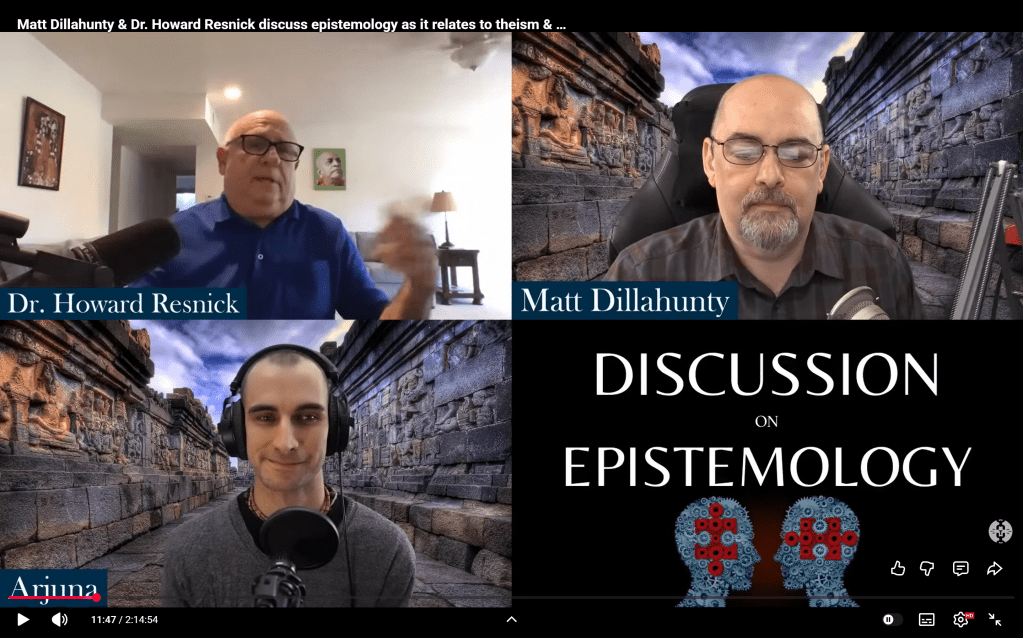
The debate between Hridayānanda Dāsa Gosvāmī and Matt Dillahunty, available on YouTube under the title Hridayananda Dasa Goswami vs Matt Dillahunty, presents, on the surface, an encounter between a learned Vaiṣṇava scholar and a seasoned atheist debater. Hridayānanda is articulate, educated, and well-versed in both Western philosophy and Vaiṣṇava theology. Dillahunty is sharp, disciplined, and relentless in his epistemological demands.

Yet despite Hridayānanda’s evident competence, the debate reveals a deeper problem. The issue is not that the Vaiṣṇava position lacks strength, nor that atheism is particularly compelling. The issue is methodological.

The foundation was conceded before the argument even began.

This article will demonstrate that Hridayānanda’s presentation fails not because of insufficient arguments, but because he accepts an epistemic framework that is fundamentally incompatible with Vaiṣṇava thought. As a result, even correct insights are rendered ineffective, and the discussion collapses into a form of reasoning that cannot sustain transcendental truth.

The First Concession: Autonomy of Reason

Early in the discussion, Hridayānanda affirms that human beings must “reason their way” to correct moral and philosophical understanding. While this may appear reasonable, it introduces a fatal shift.

In Vaiṣṇava epistemology, knowledge is not constructed from below through autonomous reasoning. It descends through śabda-pramāṇa—revealed knowledge transmitted through a reliable disciplic succession. Reason has a role, but it is subordinate. It clarifies, organizes, and defends—but it does not originate truth.

By presenting reason as an independent pathway to truth, Hridayānanda implicitly grants the atheist’s central assumption:

That human cognition is a sufficient and self-validating source of knowledge.

Once this is granted, the debate is no longer about whether Krishna is the Absolute Truth, but whether Krishna can be justified within a human-centered epistemology.

That is already a loss. Not because the conclusion is false, but because the standard of judgment has been misplaced.

The Euthyphro Trap: Morality Detached from God

In an attempt to avoid the charge of blind scriptural obedience, Hridayānanda suggests that actions are not moral merely because scripture commands them, but rather that they are found in scripture because they are moral.

This formulation aligns with the second horn of the classical Euthyphro dilemma: that morality exists independently of God.

But if morality is independent of God, then:

  • God is no longer the source of moral truth.
  • Moral standards exist prior to or outside of Him.
  • Human beings may, in principle, access morality without revelation.

This undermines the very necessity of divine authority.

From a Vaiṣṇava standpoint, this is unacceptable. The proper understanding is neither that morality is arbitrary nor that it is external to God, but that it is grounded in His nature and will. Dharma is not discovered independently and then confirmed by scripture—it is revealed.

By conceding this point, Hridayānanda unintentionally grants the atheist a stable platform for moral reasoning without God.

The Collapse of Śāstra into Cultural Guidance

At several points, Hridayānanda suggests that certain scriptural injunctions may not be applicable in the present age. While contextual application is indeed acknowledged within the tradition, the manner in which this is presented in the debate shifts authority from revelation to human judgment.

Śāstra is no longer the standard—it becomes a resource to be evaluated..

This shift has profound consequences:

  • Revelation becomes negotiable.
  • Human reasoning becomes the final arbiter.
  • Selective acceptance replaces submission.

From the atheist’s perspective, this is a gift. If scripture is merely culturally conditioned, then it no longer carries epistemic authority. It becomes one voice among many, to be evaluated and accepted or rejected based on independent criteria.

Thus, the debate is no longer about whether revelation is true, but whether it is useful.

Accepting the Atheist’s Epistemology

Matt Dillahunty consistently presses a single question:

“How can I tell that what you’re saying is true?”

This question presupposes a specific epistemology:

  • Knowledge must be publicly verifiable.
  • Claims must be testable or falsifiable.
  • Truth must be accessible from a neutral standpoint.

Hridayānanda never challenges these assumptions. Instead, he attempts to answer the question within that framework.

This is a decisive error.

From a Vaiṣṇava perspective, there is no neutral standpoint. All knowledge rests upon foundational commitments. The demand for neutral verification is itself grounded in assumptions about reality, cognition, and truth that cannot be justified within atheism. 

By accepting Dillahunty’s criteria, Hridayānanda places Krishna consciousness on trial before a court that has no authority to judge it.

The Failure of the “Spiritual Experience” Argument

In response to demands for verification, Hridayānanda appeals to spiritual practice:

By engaging in bhakti, one will come to realize the truth.

While this is correct within the tradition, it is presented in a way that appears indistinguishable from subjective religious claims.

From the atheist’s standpoint, this is easily dismissed:

  • Other religions make similar claims.
  • Personal experience is unreliable.
  • The argument appears circular.

The deeper issue is not the appeal to experience itself, but the failure to establish why experience should be trusted at all within an atheistic framework.

A stronger approach would expose that:

  • Atheism cannot justify the reliability of cognition.
  • Therefore, it cannot dismiss spiritual experience without undermining its own epistemology.

Without this move, the appeal to experience remains vulnerable.

The Missing Step: A Transcendental Challenge

At no point does Hridayānanda press the decisive question:

On what basis does the atheist trust reason, perception, or logic?

Under atheism, human cognition is the product of unguided material processes aimed at survival, not truth. There is no guarantee that our beliefs correspond to reality. Indeed, if our faculties are shaped solely by evolutionary pressures, their primary function is adaptive success, not epistemic accuracy.

This leads to a profound problem:

If one’s cognitive faculties are not truth-oriented, then one has no reason to trust any belief—including atheism itself.

This is not a peripheral issue. It is foundational. It determines whether knowledge itself is possible.

A Vaiṣṇava response must begin here:

  • Knowledge presupposes a conscious, truthful source.
  • Rationality presupposes order and intelligibility.
  • Truth presupposes an Absolute foundation.

Without Krishna, these are inexplicable.

The Result: A Strong Case, Built on Borrowed Ground

Hridayānanda presents many valid criticisms of atheism:

  • its inability to ground morality.
  • its reduction of consciousness.
  • its existential implications.

Yet these arguments remain within a shared framework of autonomous reasoning.

As a result, atheism is treated as:

  • a weaker explanation.
  • an undesirable worldview.

But not as an impossible foundation.

This is the central failure.

A proper Vaiṣṇava response does not merely argue that atheism is insufficient. It demonstrates that atheism cannot account for the very tools it uses—reason, logic, and knowledge itself.

Who Won the Debate?

At the level of public perception, the answer is straightforward:

Matt Dillahunty won the debate.

He controlled the structure of the conversation, set the epistemological standards, and repeatedly pressed a single question:

“How can I tell that what you’re saying is true?”

This question, simple as it appears, defined the entire exchange. Hridayānanda accepted its underlying assumptions and attempted to answer it within the framework provided. From the standpoint of a neutral observer, the result was predictable: the Vaiṣṇava position appeared unable to meet the demanded criteria of justification.

In this sense, Dillahunty achieved what matters most in a debate setting. He maintained clarity, forced his opponent into a defensive posture, and exposed what appeared to be weaknesses in the theistic position. By conventional standards, this constitutes a victory.

However, this verdict must be qualified.

Dillahunty’s success was not the result of establishing a philosophically secure foundation for atheism. At no point did he justify:

  • the reliability of human cognition.
  • the validity of logical laws.
  • the uniformity of nature required for scientific reasoning.
  • the objective basis of truth or meaning.

These were simply assumed throughout.

Thus, while he won the debate procedurally, he did so by operating within a framework that itself remains ungrounded. The appearance of strength derives not from the completeness of his position, but from the fact that its presuppositions were never challenged.

This leads to a more precise assessment:

  • Debate winner: Matt Dillahunty.
  • Philosophical resolution: Unreached.
  • Underlying issue: Conceded epistemological framework.

The decisive factor was not the strength of atheism, but the terms under which the discussion was conducted.

Hridayānanda did not lose because the Vaiṣṇava worldview lacks explanatory power. He lost because he argued for Krishna within a system that had already excluded Him as a necessary foundation for knowledge.

Once that concession is made, even strong arguments begin to work against their own conclusion.

The lesson is therefore not merely rhetorical, but foundational:

A transcendental position cannot be defended on borrowed epistemological ground.

Reconstructing the Exchange: What Should Have Been Said

The failure is not merely theoretical. It can be observed in concrete moments throughout the debate. By isolating a few key exchanges and reconstructing them as they should have unfolded, the extent of the epistemological concession becomes unmistakable—and the strength of a properly grounded Vaiṣṇava response becomes equally clear.

1. The Central Question: “How Can I Tell You’re Right?”

What was asked:

Dillahunty repeatedly pressed:
“How can I tell that what you’re saying is true?”

What was given:

An appeal to practice: engage in bhakti, and realization will come.

How it should have been answered:

Before answering that question, we must examine the assumptions behind it. You are asking for a method by which you can independently verify truth. But this presupposes that your cognitive faculties are reliable, that your reasoning is valid, and that your standards of verification are themselves trustworthy.

On what basis do you justify these assumptions?

If your mind is the product of unguided material processes aimed at survival rather than truth, then you have no non-circular reason to trust your conclusions. Your demand for verification already assumes a level of epistemic reliability that your worldview cannot account for.

Therefore, the issue is not whether you can verify Krishna within your framework, but whether your framework can justify the very act of verification.

2. The Moral Question: Is Good Independent of God?

What was implied:

In response to moral challenges, it was suggested that actions are not moral merely because scripture commands them, but that they are present in scripture because they are moral.

How it should have been answered:

That formulation assumes that moral standards exist independently of the Absolute. But if morality exists outside of God, then He is no longer its source, and moral truth becomes accessible without reference to Him.

From a Vaiṣṇava perspective, this is a false dilemma.

Morality is neither arbitrary nor external to God. It is grounded in His nature and expressed through His will. Dharma is not discovered independently and then confirmed by scripture—it is revealed by the Supreme Person, who is the source of all order, meaning, and value.

When you make moral judgments, you are not appealing to an autonomous standard. You are implicitly relying on an objective moral reality that requires a transcendent foundation.

Without such a foundation, moral claims reduce to preference, convention, or evolutionary conditioning—none of which can produce genuine obligation.

3. The Appeal to Experience: Is Bhakti Just Subjective?

What was said:

Spiritual realization comes through practice. By engaging in bhakti, one will come to understand.

How it should have been answered:

You dismiss spiritual experience as subjective, but on what basis do you trust any experience at all?

All knowledge—empirical or otherwise—depends upon the reliability of perception and cognition. Yet within your framework, these are the products of blind processes with no inherent orientation toward truth.

If you cannot justify the trustworthiness of your own experience, then you cannot selectively reject spiritual experience while accepting sensory or scientific experience. Both stand or fall together.

The question, therefore, is not whether spiritual realization is subjective, but whether your worldview can account for objective knowledge of any kind.

From the Vaiṣṇava standpoint, cognition is reliable because it ultimately rests upon a conscious, truthful source. Knowledge is possible because reality is grounded in an Absolute Person.

Without that foundation, all appeals to experience—scientific or otherwise—remain epistemologically unsupported.

What these reconstructions make clear is that the debate did not fail due to a lack of answers, but due to a failure to begin at the proper starting point. Once the epistemological foundation is secured, the entire structure of the discussion is transformed.

Conclusion: Representation Requires Foundation

A representative of the Gauḍīya Vaiṣṇava tradition must do more than present intelligent arguments. He must preserve the epistemological foundation upon which those arguments stand.

This means:

  • Rejecting the myth of epistemic neutrality.
  • Affirming the primacy of śabda.
  • Exposing the internal contradictions of atheism.
  • Demonstrating that Krishna is not an optional explanation, but the necessary ground of knowledge itself.

When this foundation is secured, the discussion changes entirely. The question is no longer whether Krishna can be proven within human reasoning, but whether human reasoning is possible without Krishna.

Hridayānanda’s debate shows what happens when this foundation is not maintained.

The lesson is clear:

The strength of the conclusion depends entirely on the integrity of the starting point.

And in matters of transcendental truth, the starting point cannot be compromised.
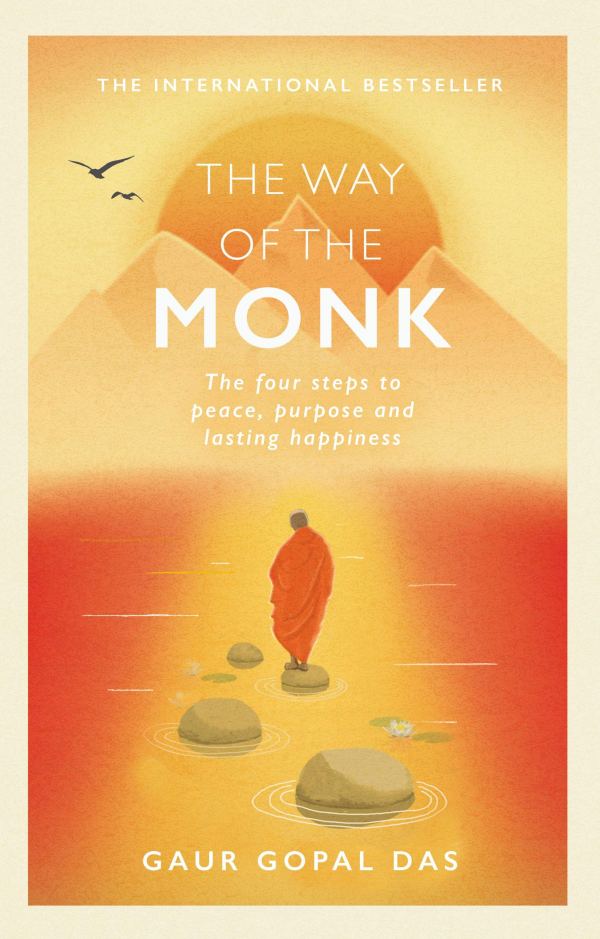
From Bhakti to Self-Development (Part 3): A Critical Review of The Way of the Monk by Gaur Gopal Das

By Ajit Krishna Dasa

This article is part of the series “From Bhakti to Self-Development,” which examines the growing tendency to present Krishna consciousness as a form of modern self-help spirituality.

Introduction

In recent years a noticeable shift has taken place in the public presentation of Krishna consciousness. Teachings that were historically proclaimed as divine revelation demanding surrender to the Supreme Personality of Godhead are increasingly framed in the language of modern self-development. Concepts drawn from the Bhagavad-gītā appear in books about happiness, purpose, leadership, and emotional well-being. Spiritual wisdom is presented not primarily as a call to transcend material existence through devotion to Krishna but as a resource for improving human life within the material world.

This series examines that shift through critical readings of contemporary books that draw upon Vaiṣṇava traditions while presenting their message through the conceptual framework of modern self-help spirituality. The purpose is not to question the sincerity of the authors involved but to analyze the structure of the ideas being communicated. When the philosophical center of a tradition moves—even subtly—the consequences for how that tradition is understood can be profound.

Gaur Gopal Das’s book The Way of the Monk offers a particularly revealing example of this development.

The Monk as a Public Representative

The title of the book itself immediately establishes the framework through which the message is presented: The Way of the Monk. The author is not introduced simply as a writer or motivational speaker. He explicitly presents himself as a monk of the Krishna consciousness movement. His saffron clothing, tilaka markings, and references to Śrīla Prabhupāda, his spiritual lineage, and the Bhagavad-gītā reinforce that identity.

This is not an insignificant detail. When a person publicly appears as a Vaiṣṇava monk and offers guidance about life, happiness, and purpose, the message inevitably becomes a representation of the tradition itself. The audience naturally assumes that what is being presented is an example of how a practitioner of Krishna consciousness understands the world and applies spiritual knowledge.

For this reason the conceptual framework of the book cannot be treated merely as a private experiment in motivational writing. The message becomes a public model of what Krishna consciousness supposedly offers to society.

If the book teaches readers that the wisdom of a monk primarily helps people live happier, more balanced, and more meaningful lives, the implicit conclusion becomes unavoidable: Krishna consciousness appears to be a spiritual philosophy for improving one’s life.

The tradition itself is thus reframed through the lens of modern self-development.

The Promise of Peace, Purpose, and Happiness

The central promise of The Way of the Monk is clear. The book offers guidance for achieving peace, purpose, and lasting happiness. Through stories, reflections, and practical insights, readers are encouraged to cultivate balance among different dimensions of their lives.

Such aspirations are obviously attractive. Human beings naturally desire happiness and meaning. Yet the crucial issue is how the problem of human life is defined.

In the Bhagavad-gītā the central problem is not that Arjuna lacks happiness, balance, or emotional well-being. Arjuna’s crisis arises from confusion about dharma. He stands on the battlefield unable to determine what his duty is. His question to Krishna is not “How can I find peace?” but “Tell me decisively what is my duty.” The problem is moral and spiritual confusion rooted in the false identification with the body and the attachments that arise from that illusion.

Arjuna does not approach Krishna as a life coach who will help him become happier or more balanced. He approaches Him as the Supreme authority who must reveal the truth about duty, the self, and the ultimate purpose of life.

Krishna’s response therefore does not consist of life-coaching advice about happiness and balance. He systematically reveals the nature of the self, the temporary nature of material existence, the reality of the Supreme Personality of Godhead, and the necessity of surrender to Him.

In other words, the Bhagavad-gītā begins not with the search for happiness but with the question of dharma and ultimate truth.

When the philosophical framework is reorganized so that the central question becomes how to live a peaceful and fulfilling life, the orientation of the discussion has already shifted.

The Structure of the “Four Wheels of Life”

The conceptual framework of the book further reinforces this shift. Human life is divided into four domains—personal life, relationships, work life, and social contribution. The reader is encouraged to cultivate harmony among these areas in order to achieve balance and fulfillment.

This model closely resembles the frameworks commonly used in modern life-coaching literature. Many self-development systems divide life into similar categories in order to guide individuals toward greater success and satisfaction.

The problem is not that such advice is entirely without value. The difficulty arises when this structure becomes the interpretive framework through which spiritual wisdom is presented. In the classical teachings of bhakti the organizing principle of life is devotion to Krishna. All activities—work, relationships, and social responsibilities—derive their meaning from their connection to that ultimate purpose.

When life itself is instead organized around worldly domains such as career, relationships, and personal growth, spiritual practice becomes only one element within a broader program of self-improvement.

The theological center has quietly moved.

Spirituality as Psychological Guidance

Throughout the book spiritual ideas appear primarily as tools for navigating life more successfully. Reflection, meditation, discipline, and moral clarity are presented as practices that help individuals cultivate peace and purpose.

Such language is deeply characteristic of modern therapeutic spirituality. Religion becomes a resource for emotional well-being and psychological stability.

Yet this framing represents a profound departure from the classical presentation of bhakti. Devotion to Krishna is not pursued because it enhances personal happiness. It is pursued because Krishna is the Supreme Personality of Godhead and the eternal object of the soul’s love.

Śrīla Prabhupāda repeatedly warned against attempts to reduce spiritual life to a program of self-improvement. He often observed that modern society wants the benefits of religion while avoiding its central demand: surrender to God. In his words, people want “God’s kingdom without God.”

When Krishna consciousness is presented primarily as a method for cultivating peace and happiness, it easily becomes compatible with this mentality.

Bridge Preaching and Its Consequences

Defenders of this approach often describe it as a form of “bridge preaching.” The idea is that by speaking about universal themes such as happiness, purpose, and personal growth, spiritual teachers can build a bridge to modern audiences who might otherwise ignore religious teachings. Once people become interested, deeper philosophy can be introduced.

In theory this strategy appears reasonable. In practice, however, it raises serious questions. People are attracted by the message that is presented to them. If the message emphasizes happiness, balance, and personal fulfillment, it will naturally attract individuals seeking those things.

Over time the audience itself begins to shape the message. Spiritual teachings are gradually adjusted to remain attractive and accessible. Controversial or demanding aspects of the philosophy become less visible, and the tradition slowly adapts to the expectations of those who approach it.

Instead of transforming society through the uncompromising message of bhakti, the movement begins to mirror the psychological concerns of the culture it seeks to influence.

Bridge preaching thus risks becoming something quite different from its original intention. Rather than serving as a gateway to transcendental knowledge, it can gradually transform the message itself.

The Direction of Spiritual Desire

The Bhagavad-gītā acknowledges that many people approach spiritual life with imperfect motivations. Krishna explains that four kinds of pious people begin to render devotional service to Him: the distressed, the seeker of wealth, the inquisitive, and the seeker of knowledge. Even those motivated by material concerns are considered fortunate because they approach the Supreme Lord. Their desires may initially be mixed, but by turning toward Krishna they place themselves in contact with transcendental reality. Over time that contact gradually purifies the heart.

The difficulty with modern self-development presentations of spirituality is that this direction of movement often changes. Instead of encouraging people to approach Krishna—even with their material desires—the teachings are reorganized around helping individuals achieve peace, balance, and success within their existing aspirations. Spiritual wisdom becomes a method for managing life more effectively rather than a call to surrender to the Supreme Personality of Godhead. The seeker is therefore not led beyond material desires but is often given tools for navigating them more comfortably.

When spirituality functions in this way, its transformative power is quietly neutralized. Instead of drawing people toward Krishna, it risks stabilizing them within the very goals that bind them to the material world.

The Marginalization of Krishna

Perhaps the most revealing feature of The Way of the Monk is the relatively minor role that Krishna plays within the overall narrative. Although references to spiritual teachings appear occasionally, the book primarily revolves around human life—our struggles, ambitions, relationships, and aspirations.

In the classical Gauḍīya Vaiṣṇava worldview Krishna is not merely a source of inspiring wisdom. He is the Supreme Personality of Godhead, the ultimate object of devotion, and the center of all existence. The purpose of human life is therefore to awaken love for Him.

When Krishna appears only occasionally within a broader discussion of happiness and purpose, the theological center of the tradition has already shifted.

The narrative remains spiritual in tone, but its organizing principle becomes human fulfillment rather than divine reality.

The Audience Such Preaching Creates

Every form of preaching attracts a particular type of audience. The message presented determines the expectations with which people approach the tradition.

When Krishna consciousness is presented as a path of surrender to the Supreme Personality of Godhead, it attracts individuals who are prepared to examine their lives in light of transcendental truth. Such seekers may struggle with the demands of spiritual life, but they understand from the beginning that the goal is not merely personal happiness. The goal is devotion.

When the message is framed primarily in terms of peace, purpose, and life balance, the situation changes. The audience that gathers around such presentations will naturally consist of individuals seeking personal development and psychological well-being. They approach spirituality not as a path of surrender but as a method for enhancing their lives.

This difference has profound consequences. Once the movement begins to attract large numbers of people whose primary interest lies in self-improvement, the internal culture of the community inevitably begins to adjust to those expectations. Spiritual teachings that emphasize renunciation, surrender, and transcendence may appear overly demanding or out of place. The pressure to soften or reinterpret them gradually increases.

Over time a subtle but powerful transformation can occur. Instead of guiding people toward the radical theology of bhakti, the movement begins to function as a provider of spiritualized life advice. Devotional language remains, but the underlying expectations of the audience have shifted.

This dynamic is particularly dangerous because it unfolds slowly. At each stage the adjustments appear minor and pragmatic. Yet the cumulative effect can be significant. A tradition that originally called people to transcend the material world may gradually find itself helping them navigate that world more comfortably.

The Cost to Śrīla Prabhupāda’s Mission

The consequences of this shift extend far beyond a single book. Śrīla Prabhupāda did not establish the Krishna consciousness movement in order to offer the world another philosophy of personal development. He repeatedly emphasized that his mission was to present the teachings of the Bhagavad-gītā and the Śrīmad-Bhāgavatam as they are.

That message is not primarily about living a balanced and meaningful life within the material world. It is about awakening devotion to Krishna and transcending the entire material condition.

When the public presentation of Krishna consciousness becomes dominated by the language of happiness, purpose, and self-improvement, the movement itself begins to appear as a branch of the global self-help industry.

The theological radicalism of bhakti disappears behind the reassuring language of personal growth.

This transformation does not merely soften the message. It fundamentally alters it.

Conclusion

The Way of the Monk is a thoughtful and engaging book that offers many reflections on navigating modern life. Its tone is compassionate, its stories are accessible, and its advice will resonate with many readers searching for meaning and balance.

Yet the book also illustrates a broader trend in the contemporary presentation of Krishna consciousness. By framing spiritual wisdom primarily as a pathway to peace, purpose, and happiness, it reorganizes the philosophy of bhakti within the conceptual framework of modern self-development.

When such a presentation is offered by a publicly recognized monk of the tradition, the implications become particularly serious. The message communicated to the world is no longer that Krishna is the Supreme Personality of Godhead and that the ultimate goal of life is surrender to Him. Instead Krishna consciousness begins to appear as a philosophy for improving human life.

That shift cannot be dismissed as a harmless adaptation. It represents a fundamental reorientation of the tradition itself.

If Krishna consciousness is gradually transformed into a form of spiritualized self-help, the mission of Śrīla Prabhupāda will not merely be softened. It will be quietly replaced.

The question facing the movement today is therefore not merely how to make Krishna consciousness attractive to the modern world. The real question is whether the movement will continue to present the uncompromising message that Śrīla Prabhupāda gave—or whether it will gradually reshape that message until it becomes indistinguishable from the countless philosophies of self-improvement already offered by the modern world.

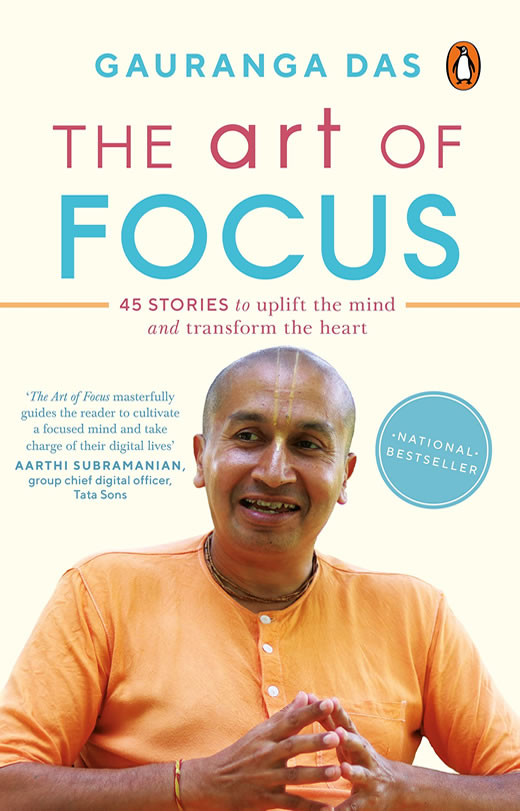
From Bhakti to Self-Development (Part 2): A Critical Review of The Art of Focus by Gauranga Das

By Ajit Krishna Dasa

This article is part of the series “From Bhakti to Self-Development,” examining the growing tendency to present Krishna consciousness as a form of modern self-help spirituality.

Introduction

A serious and increasingly visible shift is taking place in the public presentation of Krishna consciousness. This shift is not merely stylistic, nor can it be dismissed as a harmless adaptation. It represents a deeper conceptual transformation in how the philosophy itself is framed. Teachings that were historically proclaimed as divine revelation demanding surrender to the Supreme Personality of Godhead are now increasingly presented as tools for personal development, psychological well-being, and success in modern life. Spiritual wisdom is repackaged as leadership training, meditation becomes a method for improving productivity, and devotion is reframed as a strategy for cultivating focus, resilience, and emotional balance. In this new presentation, the eternal path of bhakti begins to resemble a refined form of modern self-help.

This transformation is not merely a matter of language. Once Krishna consciousness is systematically presented as a method for improving one’s material life, the goal of spiritual life quietly changes. Instead of awakening love for Krishna and transcending the material condition, the emphasis shifts toward cultivating desirable psychological states and successful lifestyles within the material world. The center of gravity moves away from Krishna and toward the individual self. What was once a theology of surrender becomes a technology of self-improvement.

Gauranga Das’s book The Art of Focus offers a revealing example of this development. The book contains forty-five inspirational stories intended to help readers cultivate discipline, compassion, gratitude, determination, and focus. The author explains that the lessons are derived from Vedic wisdom and the teachings of the Bhagavad-gītā, and the book repeatedly cites scriptural ideas to support its reflections. At first glance the book appears harmless and even admirable. The stories are engaging, the tone is uplifting, and the moral lessons appear positive. Yet beneath this appealing surface lies a deeper problem. When Krishna consciousness is systematically presented as a system of self-optimization rather than surrender to Krishna, the entire theological structure of the tradition is subtly altered. What emerges may still resemble spirituality on the surface, but its philosophical center has already shifted.

Public Representation of Krishna Consciousness

Before examining the content of the book itself, it is important to understand the context in which it is presented. If a devotee privately wrote a book on productivity, leadership, or psychological development for secular audiences, such a project would not necessarily raise serious concerns. Devotees earn their livelihood through many professions, and there is nothing inherently problematic about applying spiritual principles to ordinary areas of life.

However, the situation in this case is fundamentally different. Gauranga Das publicly presents himself as a monk and teacher within the Krishna consciousness movement. He wears saffron robes, displays tilaka, quotes scripture, and explicitly connects his message to the teachings of Śrīla Prabhupāda. His official website prominently highlights his roles within ISKCON while simultaneously presenting him as a leadership coach and mindfulness teacher who addresses corporate and secular audiences. In other words, the devotional identity and the coaching activity are intentionally intertwined. The presentation is not that of a private professional who happens to be a devotee, but of a spiritual representative who teaches leadership and life philosophy through the framework of Krishna consciousness.

This distinction matters. When a monk publicly represents Krishna consciousness in this way, the message he conveys inevitably becomes a representation of the tradition itself. The ideas presented in such books are not merely personal reflections but part of the public image of the movement. It therefore becomes necessary to ask what exactly is being preached. Is Krishna consciousness being presented as the eternal process of surrender to the Supreme Personality of Godhead, or is it being reframed as a refined system of psychological development? Once this question is asked, the conceptual framework of The Art of Focus becomes much easier to evaluate.

The Structure of the Book

The structure of the book is simple and appealing. Each chapter presents a short narrative followed by a reflection that extracts a moral lesson from the story. The topics addressed include association, compassion, perseverance, humility, leadership, gratitude, and mind control. The narrative method is engaging, and the author clearly possesses the ability to communicate ideas through memorable illustrations.

For example, in the opening story a spiritual mentor demonstrates the importance of association by silently removing a glowing log from a burning fire. Once separated from the other logs, the wood gradually loses its heat and eventually becomes cold. When the log is placed back into the fire, it reignites. The lesson presented to the reader is that spiritual progress depends on maintaining association with spiritually minded people who can sustain one’s inner enthusiasm (pp. 17–20).

The stories themselves are often compelling. The difficulty arises in the interpretive framework through which the lessons are presented. Throughout the book, spiritual wisdom is repeatedly framed as a means of cultivating human excellence. Readers are encouraged to improve their focus, strengthen their discipline, manage their thoughts, cultivate positive relationships, and develop emotional stability. In this presentation, the teachings of the Bhagavad-gītā function primarily as resources for improving one’s life within the material world.

The Missing Center

The most striking feature of this approach is not what the book says but what it consistently leaves unsaid. The virtues discussed throughout the text—compassion, humility, gratitude, discipline, and self-control—are repeatedly praised as universal qualities that enhance human life. Yet they are rarely anchored in the ultimate theological foundation of the Vaiṣṇava tradition: devotion to Krishna.

Within the classical framework of Vaiṣṇava theology, these qualities do not exist independently as moral achievements produced by human effort. They arise naturally from devotion to the Supreme Lord. The Śrīmad-Bhāgavatam explains this point in a famous verse:

yasyāsti bhaktir bhagavaty akiñcanā
sarvair guṇais tatra samāsate surāḥ
harāv abhaktasya kuto mahad-guṇā
mano-rathenāsati dhāvato bahiḥ

“One who has unflinching devotion for the Personality of Godhead possesses all the good qualities of the demigods. But one who is not a devotee of the Lord has only material qualifications that are of little value because he is hovering on the mental plane.” (Bhāg. 5.18.12)

This teaching radically challenges the modern assumption that good character can exist independently of devotion. According to the Bhāgavatam, genuine spiritual qualities arise only when a person becomes devoted to the Supreme Personality of Godhead. Without devotion they remain temporary mental constructions produced by material conditioning. The virtues may appear externally impressive, but they lack the spiritual substance that gives them lasting value.

In The Art of Focus, however, the virtues are frequently discussed as psychological habits that individuals can cultivate in order to improve their lives. Compassion becomes a principle for better relationships. Mind control becomes a method for managing thoughts. Discipline becomes a tool for achieving one’s goals. In this framework, devotion to Krishna is not the foundation from which these qualities arise. Instead, the qualities themselves become the primary focus.

Endorsements and the Problem of Secular Validation

Another revealing feature of The Art of Focus is the long list of endorsements from public figures who are not devotees. The advance praise includes political leaders, corporate executives, and institutional figures who commend the book for helping readers cultivate focus, discipline, leadership, and emotional balance.

At first sight this may appear completely unproblematic. After all, Śrīla Prabhupāda himself welcomed appreciation from scholars and intellectuals who recognized the value of his books. Indeed, he often cited such praise as evidence that the philosophical depth of the Vaiṣṇava tradition was being acknowledged in the wider intellectual world. The crucial question, however, is not whether non-devotees appreciate a spiritual work, but what exactly they are appreciating. When scholars praised Śrīla Prabhupāda’s books, they did so because the books presented Krishna as the Supreme Personality of Godhead and bhakti as the ultimate goal of life. By contrast, the endorsements for The Art of Focus celebrate the book primarily for its usefulness as a guide to personal development, leadership, and mental discipline. The praise does not center on devotion to Krishna, nor on surrender to the Supreme Lord, but on the practical benefits that readers can derive for improving their lives. The distinction is significant. In the first case, the tradition is appreciated because of its theological truth; in the second case, it is valued because it functions effectively as a form of self-improvement literature. When this becomes the dominant mode of appreciation, the implicit message communicated to readers is that the teachings of Krishna consciousness are valuable not because they reveal the nature of ultimate reality, but because they help us live better within the material world. Such a shift may appear subtle, but it quietly redefines the very purpose of spiritual knowledge.

This point also reveals something deeper about the direction of the presentation. When spiritual teachings are repeatedly framed in ways that attract praise from secular leaders, corporate executives, and public institutions, the teachings themselves inevitably begin to adapt to the expectations of those audiences. The message becomes increasingly acceptable to the materialistic worldview because it no longer challenges its fundamental assumptions. Instead of confronting the illusion that material life is the ultimate goal, spirituality is reinterpreted as a way of enhancing that very life. In such a framework, Krishna consciousness no longer appears as a radical call to transcend the material world through surrender to the Supreme Lord. It appears instead as a refined philosophy for becoming a more focused, balanced, and successful participant within it. When this shift occurs repeatedly and systematically, the danger is not merely that individuals misunderstand the tradition, but that the movement itself gradually begins to produce a generation of spiritual seekers whose primary interest lies not in surrender to Krishna, but in the promise of personal optimization.

This dynamic can also create a subtle but powerful feedback loop. When secular audiences praise Krishna consciousness because it appears to function as a philosophy of focus, leadership, or psychological well-being, they naturally begin to speak about it in those terms. In their appreciation of the teachings, Krishna consciousness is interpreted and described as a system of self-development. But once that interpretation becomes widespread, an unexpected tension emerges. When these same audiences later encounter the uncompromising theological claims of the tradition—its insistence on surrender to Krishna, its critique of materialistic civilization, or its emphasis on transcendence beyond worldly success—they may feel confused or even disappointed. The philosophy they thought they had discovered suddenly appears far more demanding than the version that first attracted them. At that point a subtle pressure begins to arise within the movement itself. If the favorable reception from the wider culture depends on presenting the teachings in a softened form, there will inevitably be voices arguing that certain controversial elements should be minimized, reinterpreted, or even removed. In fact, such discussions already exist among some devotees who suggest that certain statements of Śrīla Prabhupāda should be modified or excluded because they appear too difficult for modern audiences. Once this kind of pressure becomes normalized, the logic of preaching quietly reverses itself. Instead of presenting Krishna consciousness as it is and allowing the world to react, the teachings begin to adapt themselves to what the world finds comfortable. Over time this process can gradually reshape the internal culture of the movement itself, replacing the aspiration for pure devotion with a far more modest goal: spiritualized self-improvement within the material world.

Spiritual Wisdom as Psychological Management

The psychological orientation of the book becomes particularly evident in the discussion of thought patterns. In one section, thoughts are divided into four categories: necessary, positive, wasteful, and negative (pp. 33–34). Readers are encouraged to maximize necessary and positive thoughts while minimizing wasteful and negative ones. This classification resembles modern cognitive-behavioral frameworks in which emotional well-being is achieved by restructuring patterns of thinking.

While such advice may appear practical, it also reveals the conceptual shift that has taken place. The central problem of spiritual life is no longer forgetfulness of Krishna but the presence of negative thought patterns. The solution therefore becomes psychological management rather than devotional surrender. The language of spiritual transformation gradually gives way to the language of mental optimization.

The Illusion of “God’s Kingdom Without God”

Śrīla Prabhupāda frequently warned that modern spirituality often attempts to preserve the benefits of religion while removing its theological center. People want the peace, morality, and happiness associated with spirituality, but they are reluctant to surrender to the Supreme Lord. In Prabhupāda’s words, they want “God’s kingdom without God.”

When Krishna consciousness is presented primarily as a system for cultivating positive qualities, it easily becomes compatible with this mentality. Readers can adopt the teachings without ever confronting the central demand of bhakti, which is surrender to Krishna. Spirituality becomes a method for enhancing one’s life rather than a path for transcending material existence.

Some defenders of this approach argue that such presentations represent a gradual introduction to Krishna consciousness. According to this reasoning, people may initially be attracted by practical wisdom and later become interested in deeper spiritual commitment. However, this argument overlooks a fundamental principle of spiritual psychology. People are attracted by the message that is presented to them. If Krishna consciousness is introduced primarily as a system for personal development, it will naturally attract individuals who are seeking personal development rather than devotional surrender.

Conclusion

The Art of Focus is engaging, readable, and filled with inspirational stories. Many readers will undoubtedly find its reflections helpful. Yet the book also illustrates a broader transformation in the presentation of Krishna consciousness in the modern world. Spiritual wisdom is increasingly framed as a system for improving human life rather than as a call for surrender to Krishna.

This shift may appear subtle at first, but its long-term consequences are profound. When devotion is replaced by self-optimization, the center of the tradition quietly disappears. What remains may still resemble spirituality, but its essence has already been replaced by something fundamentally different.

For those who care about preserving the teachings of Śrīla Prabhupāda, this development should not simply be accepted as a harmless preaching strategy. If the public presentation of Krishna consciousness gradually shifts from devotional surrender to spiritual self-optimization, the tradition itself risks being misunderstood by those it seeks to reach. For devotees who value the integrity of Śrīla Prabhupāda’s teachings, this development therefore deserves careful scrutiny and honest discussion.

From Bhakti to Self-Development (Part 1): A Critical Review of The Conscious Lifestyle by Gaura Nitai Das

By Ajit Krishna Dasa

This article is part of the series “From Bhakti to Self-Development,” examining the growing tendency to present Krishna consciousness as a form of modern self-help spirituality.

Introduction

In recent decades, spirituality in the West has undergone a noticeable transformation. Ancient traditions are increasingly repackaged as tools for personal development, psychological balance, and self-optimization. Meditation promises emotional regulation. Mindfulness improves productivity. Spiritual reflection becomes a method for living a more “conscious lifestyle.” In this cultural environment, religion is rarely presented as revealed truth demanding surrender. Instead, it is offered as a resource for improving one’s mental state and quality of life. This shift has not left Krishna consciousness untouched.

This shift has not only affected secular adaptations of yoga and meditation. It has begun to influence the way even explicitly devotional traditions are presented. Practices rooted in theological commitments are gradually reframed as techniques for personal well-being. The language remains spiritual, but the center of gravity moves from devotion to self-improvement.

The Conscious Lifestyle and the Therapeutic Reframing of Spirituality

A striking example of this development appears in the Danish book The Conscious Lifestyle (Den Bevidste Livsstil) by Gaura Nitai Das, currently available only in Danish. 

Even the book’s cover visually reflects this orientation. The artwork depicts a meditating human figure surrounded by symbols drawn from a wide range of spiritual and scientific traditions—an atom, a DNA strand, a yin-yang symbol, a dove, and other universal motifs. The imagery suggests a synthesis of spirituality, psychology, and scientific self-improvement rather than a presentation rooted in a specific theological tradition. Krishna or devotional imagery is notably absent. The visual message therefore mirrors the conceptual framework of the book itself: spirituality presented as a universal system for personal transformation rather than devotion to a particular Supreme Person. In a book drawing heavily on the Krishna conscious tradition, the complete absence of Krishna from the visual symbolism is itself revealing.

The message becomes even clearer on the book’s back cover. Here the reader is told that happiness and quality of life depend primarily on the “state of one’s consciousness,” and the book promises to show how thoughts, emotions, and experiences can permanently transform our “genetic state.” The language is unmistakably that of modern self-optimization culture: consciousness is something to be engineered, experiences become tools for biological transformation, and spirituality functions as a method for improving personal well-being. Once again, the emphasis falls not on devotion to Krishna but on the cultivation of an optimized inner state.

The author draws heavily on concepts from Vedic philosophy and the Krishna conscious tradition, and his admiration for those teachings is evident throughout the work. Yet the framework through which these ideas are presented reveals something troubling: the Krishna consciousness described in the book is immature and theologically underdeveloped. Instead of presenting bhakti as the ultimate truth of existence, the book repeatedly reframes spiritual ideas as tools for psychological well-being and lifestyle design.

The result is not an open rejection of Krishna consciousness. It is something more subtle: its domestication.

The book’s central project is to encourage readers to live more consciously, reflect on life’s deeper questions, and integrate spiritual perspectives into everyday life. Themes such as mortality, meaning, discipline, and ethical awareness are explored through a mixture of personal anecdotes, philosophical reflections, and references to Vedic texts. The tone is conversational and accessible, clearly aimed at readers interested in personal growth rather than formal theology.

One remark in the book makes this orientation particularly clear. At one point the author suggests that spiritual ideas may be valuable even if their truth remains uncertain, because of the positive psychological effects they can produce in human life.

This claim is deeply revealing. Once spiritual teachings are justified primarily by their psychological benefits, their truth becomes irrelevant. Religion is no longer a revelation about reality but a technique for managing human experience. At that point, Krishna consciousness ceases to be a theological tradition and becomes a therapeutic framework. What matters is no longer whether Krishna exists, but whether believing in Him produces desirable emotional states.

At first glance, this approach may seem harmless. Encouraging people to reflect on life, death, and spiritual questions is certainly not objectionable. The difficulty lies in the conceptual framework through which the spiritual teachings are introduced. Throughout the book, beliefs about the soul, God, and life after death are often framed in terms of the psychological perspective they offer rather than their objective truth. Spiritual ideas function as resources for reducing existential anxiety, creating meaning, and cultivating psychological balance.

This shift reveals the underlying problem.

From Devotion to Self-Optimization

In the Gaudiya Vaisnava tradition, as presented by Srila Prabhupada, spiritual teachings are not justified by their psychological usefulness. They are presented as revealed knowledge describing the actual nature of reality. The soul exists. Krishna exists. The relationship between them is real. Devotional practice is meaningful because it aligns human life with that reality.

In The Conscious Lifestyle, however, this order is quietly reversed. Spiritual beliefs are recommended because they help people live better lives. The truth of those beliefs becomes secondary. This pattern reveals a thin interpretation of Krishna consciousness. Instead of presenting bhakti as the ultimate goal of life, the tradition is reduced to a set of practices that help individuals cope with modern anxieties. The result resembles a beginner’s encounter with spiritual culture – fascinated by its concepts and aesthetics, but not yet grounded in its theological depth or metaphysical seriousness.

What emerges is not Krishna consciousness in its classical form, but a conceptually diluted and shallow presentation of the tradition.

The same shift appears in the book’s treatment of spiritual practice. Throughout the text, practices associated with devotional life are frequently framed as methods for cultivating awareness, regulating emotions, or improving one’s mental state. Meditation, contemplation, and reflection are described as tools for stabilizing consciousness and gaining perspective on life.

Within such a framework, spiritual disciplines begin to resemble the techniques commonly found in modern self-help literature. They become methods for managing the mind rather than acts of devotion directed toward the Supreme Person.

Nowhere is this shift more significant than in the implicit treatment of chanting. In the Gaudiya Vaisnava tradition, chanting the holy names of Krishna is not a meditation technique. It is the central act of devotional life. Srila Prabhupada never presented chanting as a technique for improving mental well-being or cultivating psychological balance. He presented it as the direct process of associating with Krishna Himself. The holy name is not a sound used to regulate consciousness; it is Krishna personally present in transcendental vibration. The holy name of Krishna is understood to be non-different from Krishna Himself. When a devotee chants, he is not merely repeating a sound to regulate his consciousness. He is engaging in direct association with the Supreme Lord.

In the cultural grammar of modern spirituality, however, chanting easily becomes reinterpreted as a form of meditative repetition. It is seen as something that helps calm the mind, deepen awareness, or cultivate inner balance. The focus shifts subtly but decisively from Krishna to the practitioner’s internal experience.

This is not a minor adjustment in terminology. It represents a fundamental theological displacement.

When chanting becomes meditation, the heart of bhakti disappears.

A similar dynamic appears in the book’s use of modern scientific language. References to neuroscience and neurotheology are introduced in order to illustrate that spiritual contemplation may produce measurable effects in the brain. These references are brief and largely rhetorical, but their function is clear: they reinforce the idea that spiritual practices are valuable because they generate beneficial psychological outcomes.

Once again the question quietly shifts from “What is true?” to “What works?”

This is precisely the logic of the self-optimization culture that dominates contemporary spirituality. Practices are adopted because they improve mental performance, reduce stress, or generate positive emotional states. Religion becomes a technology for managing consciousness.

From a Vaisnava perspective, however, this entire framework is misguided. The purpose of spiritual life is not the optimization of psychological states. It is the awakening of love for Krishna. The peace, clarity, and stability that may arise in devotional practice are not its goal. They are simply natural byproducts of engaging in a relationship with the Supreme.

The difference may appear subtle, but it marks the boundary between devotion and self-help.

Perhaps the most revealing aspect of The Conscious Lifestyle is that it does not openly oppose Krishna consciousness. On the contrary, the book expresses admiration for Vedic philosophy and devotional culture. The author’s personal journey clearly reflects genuine spiritual searching.

Yet sincerity alone does not guarantee theological clarity. The Krishna consciousness presented in the book remains unripe and theologically incomplete. Instead of presenting the tradition with the confidence of revelation, it frames its teachings in the cautious language of psychological usefulness.

When Bhakti Becomes Lifestyle

When devotional traditions are translated into the language of self-optimization, their center inevitably shifts. The practitioner no longer approaches God in a mood of surrender but approaches spiritual practices as tools for improving personal experience. Krishna becomes one resource among many in the project of self-development. The language of devotion may remain intact, but the orientation of the practice has quietly changed.

This shift has serious consequences for preaching. If Krishna consciousness is presented primarily as a tool for improving psychological well-being, then the tradition loses its unique claim. Many philosophies, therapies, and spiritual systems promise similar benefits. The distinctive feature of Gaudiya Vaisnavism is not that it helps people feel better, but that it reveals the eternal relationship between the soul and Krishna. When that claim is softened or replaced by therapeutic language, the tradition gradually dissolves into the broader marketplace of self-help spirituality.

This often happens when devotees lose confidence in presenting Krishna consciousness as it is. Faced with a modern audience skeptical of metaphysical certainty, they attempt to make the tradition more accessible by translating it into the language of personal development. Krishna consciousness becomes a path to emotional balance, clarity of mind, or conscious living.

But when bhakti is repackaged as a form of self-optimization, its essential message is lost.

Krishna consciousness does not exist to improve our lifestyle. It exists to transform our identity. The living being is not a psychological system seeking better mental states. He is an eternal servant of Krishna whose real fulfillment lies in loving devotional service to the Supreme Person.

For this reason, the most powerful presentations of the tradition have always been those that speak with theological confidence. Srila Prabhupada did not present chanting as a technique for reducing stress. He presented it as the direct means of associating with Krishna. He did not justify devotion by appealing to psychological benefits. He justified it because Krishna is the Supreme Reality. Srila Prabhupada did not travel the world teaching a method for emotional well-being; he taught that human life is meant for reviving our forgotten relationship with Krishna and returning to the spiritual world.

The difference between these two approaches is the difference between devotion and self-help spirituality.

The Conscious Lifestyle illustrates how easily the latter can absorb the former. What begins as an attempt to make spiritual teachings accessible gradually turns Krishna consciousness into one component within a broader philosophy of conscious living.

Devotion becomes lifestyle design. Bhakti becomes personal development. Krishna becomes optional.

For readers familiar with the teachings of Srila Prabhupada, this shift should raise serious concerns. A tradition centered on surrender to the Supreme Person cannot be faithfully represented if its teachings are reduced to techniques for improving one’s psychological condition.

In that sense, the book stands as a revealing document of a broader trend within modern spirituality. It shows how even sincere spiritual seekers may unintentionally dilute the very tradition that inspired them. A tradition centered on surrender to the Supreme Person cannot survive if it is repeatedly translated into the language of self-improvement and psychological optimization. When devotion becomes a lifestyle technique, its object gradually disappears.

Krishna consciousness deserves better than this.

It deserves to be presented not as a helpful philosophy of conscious living, but as what it actually claims to be: the eternal truth about the relationship between the soul and the Supreme Personality of Godhead.

When Criticizing Women Becomes a Blind Spot

By Ajit Krishna Dasa

In some discussions, there is a tendency to emphasize the “faults of women” while overlooking faults in men — often using long, sensationalized narratives about female manipulation, deception, instability, or hidden agendas. These narratives present themselves as “traditional” or “strict,” but they rely on selective quotation and ignore something fundamental:

Śāstra gives at least as many — and often far harsher — warnings about the faults of men.

Continue reading “When Criticizing Women Becomes a Blind Spot”

Self-Deception and Vaisnava Theology: Understanding the Soul’s Will to Forget

By Ajit Krishna Dasa

Why do we turn away from truths we already know deep inside? Vaiṣṇava theology describes self-deception not as innocent ignorance but as the soul’s conscious attempt to forget its eternal role as Kṛṣṇa’s servant. Out of envy and the desire for independence, we suppress reality, and māyā gently provides the illusions that make the lie livable. At our core, we still know Kṛṣṇa, yet on the surface we resist Him, creating contradictions—like atheists who rely on morality and reason that only make sense if God exists. This self-deception fuels saṁsāra, false philosophies, and even subtle ambition within spiritual life. But bhakti offers the cure: not gaining new knowledge, but removing the coverings that hide the truth we already carry. Through honesty, humility, and hearing from Śrīla Prabhupāda’s books, the soul’s real identity begins to shine again.

Continue reading “Self-Deception and Vaisnava Theology: Understanding the Soul’s Will to Forget”

Śrī Caitanya’s Horoscope Refutes the Tropical Zodiac

By Ajit Kṛṣṇa Dāsa

Introduction

As the popularity of Vedic astrology grows among modern spiritual seekers, so too does the confusion regarding fundamental concepts such as the zodiac itself. One of the most serious misunderstandings arises when practitioners attempt to apply the tropical zodiac to charts rooted in Vedic tradition and Gauḍīya paramparā. This mistake becomes glaring when applied to the sacred birth chart of Śrī Caitanya Mahāprabhu, the Golden Avatāra.

Continue reading “Śrī Caitanya’s Horoscope Refutes the Tropical Zodiac”

Rewriting Krishna’s Reality?

By Ajit Krishna Dasa

People love to act like they can make up reality as they go. They change their pronouns, call themselves a different gender or species — as if simply declaring it could make it true. They do the same with morality: deciding abortion isn’t murder if they call it “choice,” or hookup culture isn’t empty if they call it “freedom.” Every one of these moves comes from the same deep root — the desire to define reality on their own terms. And that’s a dead giveaway that they want to take God’s position. They want the power to say what is real and what is right.

Continue reading “Rewriting Krishna’s Reality?”

Do Devotees Die? The Death of a Myth!

By Ajit Krishna Dasa

In some corners of the devotee community, there’s an unspoken rule—or even open pressure—not to say that a devotee “dies.” It’s sometimes treated as offensive, incorrect, or even sinful. But this is not based on śāstra, nor on the example of our founder-ācārya. In fact, such social taboos often function more as subtle forms of control than as expressions of truth.

Continue reading “Do Devotees Die? The Death of a Myth!”

How Vaisnava Epistemology Grounds an Effective Preaching Method

A Philosophical Framework for Understanding and Preaching Kṛṣṇa Consciousness with Fidelity to Vaiṣṇava Epistemology

By Ajit Krishna Dasa

Introduction: The Pre-experiential Ground of Knowing

This paper presents a comprehensive framework for understanding Vaiṣṇava epistemology, intended especially for those engaged in the serious intellectual preaching work of Lord Caitanya Mahāprabhu’s mission. We will explore how knowledge begins not with inquiry, but with revelation—how śabda (divine testimony) is not a supplement to reason or perception, but the very ground upon which all rational thought, moral judgment, and empirical investigation rests.

Continue reading “How Vaisnava Epistemology Grounds an Effective Preaching Method”

Create a website or blog at WordPress.com

Up ↑