By Ajit Krishna Dasa
This article is part of the series “From Bhakti to Self-Development,” which examines the growing tendency to present Krishna consciousness as a form of modern self-help spirituality.
Introduction
In recent years a noticeable shift has taken place in the public presentation of Krishna consciousness. Teachings that were historically proclaimed as divine revelation demanding surrender to the Supreme Personality of Godhead are increasingly framed in the language of modern self-development. Concepts drawn from the Bhagavad-gītā appear in books about happiness, purpose, leadership, and emotional well-being. Spiritual wisdom is presented not primarily as a call to transcend material existence through devotion to Krishna but as a resource for improving human life within the material world.
This series examines that shift through critical readings of contemporary books that draw upon Vaiṣṇava traditions while presenting their message through the conceptual framework of modern self-help spirituality. The purpose is not to question the sincerity of the authors involved but to analyze the structure of the ideas being communicated. When the philosophical center of a tradition moves—even subtly—the consequences for how that tradition is understood can be profound.
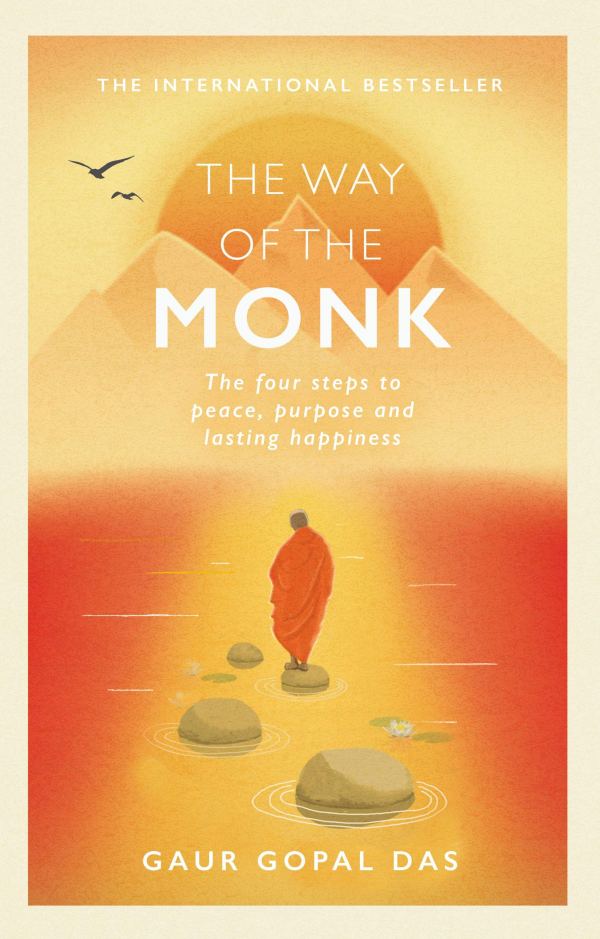
Gaur Gopal Das’s book The Way of the Monk offers a particularly revealing example of this development.
The Monk as a Public Representative
The title of the book itself immediately establishes the framework through which the message is presented: The Way of the Monk. The author is not introduced simply as a writer or motivational speaker. He explicitly presents himself as a monk of the Krishna consciousness movement. His saffron clothing, tilaka markings, and references to Śrīla Prabhupāda, his spiritual lineage, and the Bhagavad-gītā reinforce that identity.
This is not an insignificant detail. When a person publicly appears as a Vaiṣṇava monk and offers guidance about life, happiness, and purpose, the message inevitably becomes a representation of the tradition itself. The audience naturally assumes that what is being presented is an example of how a practitioner of Krishna consciousness understands the world and applies spiritual knowledge.
For this reason the conceptual framework of the book cannot be treated merely as a private experiment in motivational writing. The message becomes a public model of what Krishna consciousness supposedly offers to society.
If the book teaches readers that the wisdom of a monk primarily helps people live happier, more balanced, and more meaningful lives, the implicit conclusion becomes unavoidable: Krishna consciousness appears to be a spiritual philosophy for improving one’s life.
The tradition itself is thus reframed through the lens of modern self-development.
The Promise of Peace, Purpose, and Happiness
The central promise of The Way of the Monk is clear. The book offers guidance for achieving peace, purpose, and lasting happiness. Through stories, reflections, and practical insights, readers are encouraged to cultivate balance among different dimensions of their lives.
Such aspirations are obviously attractive. Human beings naturally desire happiness and meaning. Yet the crucial issue is how the problem of human life is defined.
In the Bhagavad-gītā the central problem is not that Arjuna lacks happiness, balance, or emotional well-being. Arjuna’s crisis arises from confusion about dharma. He stands on the battlefield unable to determine what his duty is. His question to Krishna is not “How can I find peace?” but “Tell me decisively what is my duty.” The problem is moral and spiritual confusion rooted in the false identification with the body and the attachments that arise from that illusion.
Arjuna does not approach Krishna as a life coach who will help him become happier or more balanced. He approaches Him as the Supreme authority who must reveal the truth about duty, the self, and the ultimate purpose of life.
Krishna’s response therefore does not consist of life-coaching advice about happiness and balance. He systematically reveals the nature of the self, the temporary nature of material existence, the reality of the Supreme Personality of Godhead, and the necessity of surrender to Him.
In other words, the Bhagavad-gītā begins not with the search for happiness but with the question of dharma and ultimate truth.
When the philosophical framework is reorganized so that the central question becomes how to live a peaceful and fulfilling life, the orientation of the discussion has already shifted.
The Structure of the “Four Wheels of Life”
The conceptual framework of the book further reinforces this shift. Human life is divided into four domains—personal life, relationships, work life, and social contribution. The reader is encouraged to cultivate harmony among these areas in order to achieve balance and fulfillment.
This model closely resembles the frameworks commonly used in modern life-coaching literature. Many self-development systems divide life into similar categories in order to guide individuals toward greater success and satisfaction.
The problem is not that such advice is entirely without value. The difficulty arises when this structure becomes the interpretive framework through which spiritual wisdom is presented. In the classical teachings of bhakti the organizing principle of life is devotion to Krishna. All activities—work, relationships, and social responsibilities—derive their meaning from their connection to that ultimate purpose.
When life itself is instead organized around worldly domains such as career, relationships, and personal growth, spiritual practice becomes only one element within a broader program of self-improvement.
The theological center has quietly moved.
Spirituality as Psychological Guidance
Throughout the book spiritual ideas appear primarily as tools for navigating life more successfully. Reflection, meditation, discipline, and moral clarity are presented as practices that help individuals cultivate peace and purpose.
Such language is deeply characteristic of modern therapeutic spirituality. Religion becomes a resource for emotional well-being and psychological stability.
Yet this framing represents a profound departure from the classical presentation of bhakti. Devotion to Krishna is not pursued because it enhances personal happiness. It is pursued because Krishna is the Supreme Personality of Godhead and the eternal object of the soul’s love.
Śrīla Prabhupāda repeatedly warned against attempts to reduce spiritual life to a program of self-improvement. He often observed that modern society wants the benefits of religion while avoiding its central demand: surrender to God. In his words, people want “God’s kingdom without God.”
When Krishna consciousness is presented primarily as a method for cultivating peace and happiness, it easily becomes compatible with this mentality.
Bridge Preaching and Its Consequences
Defenders of this approach often describe it as a form of “bridge preaching.” The idea is that by speaking about universal themes such as happiness, purpose, and personal growth, spiritual teachers can build a bridge to modern audiences who might otherwise ignore religious teachings. Once people become interested, deeper philosophy can be introduced.
In theory this strategy appears reasonable. In practice, however, it raises serious questions. People are attracted by the message that is presented to them. If the message emphasizes happiness, balance, and personal fulfillment, it will naturally attract individuals seeking those things.
Over time the audience itself begins to shape the message. Spiritual teachings are gradually adjusted to remain attractive and accessible. Controversial or demanding aspects of the philosophy become less visible, and the tradition slowly adapts to the expectations of those who approach it.
Instead of transforming society through the uncompromising message of bhakti, the movement begins to mirror the psychological concerns of the culture it seeks to influence.
Bridge preaching thus risks becoming something quite different from its original intention. Rather than serving as a gateway to transcendental knowledge, it can gradually transform the message itself.
The Direction of Spiritual Desire
The Bhagavad-gītā acknowledges that many people approach spiritual life with imperfect motivations. Krishna explains that four kinds of pious people begin to render devotional service to Him: the distressed, the seeker of wealth, the inquisitive, and the seeker of knowledge. Even those motivated by material concerns are considered fortunate because they approach the Supreme Lord. Their desires may initially be mixed, but by turning toward Krishna they place themselves in contact with transcendental reality. Over time that contact gradually purifies the heart.
The difficulty with modern self-development presentations of spirituality is that this direction of movement often changes. Instead of encouraging people to approach Krishna—even with their material desires—the teachings are reorganized around helping individuals achieve peace, balance, and success within their existing aspirations. Spiritual wisdom becomes a method for managing life more effectively rather than a call to surrender to the Supreme Personality of Godhead. The seeker is therefore not led beyond material desires but is often given tools for navigating them more comfortably.
When spirituality functions in this way, its transformative power is quietly neutralized. Instead of drawing people toward Krishna, it risks stabilizing them within the very goals that bind them to the material world.
The Marginalization of Krishna
Perhaps the most revealing feature of The Way of the Monk is the relatively minor role that Krishna plays within the overall narrative. Although references to spiritual teachings appear occasionally, the book primarily revolves around human life—our struggles, ambitions, relationships, and aspirations.
In the classical Gauḍīya Vaiṣṇava worldview Krishna is not merely a source of inspiring wisdom. He is the Supreme Personality of Godhead, the ultimate object of devotion, and the center of all existence. The purpose of human life is therefore to awaken love for Him.
When Krishna appears only occasionally within a broader discussion of happiness and purpose, the theological center of the tradition has already shifted.
The narrative remains spiritual in tone, but its organizing principle becomes human fulfillment rather than divine reality.
The Audience Such Preaching Creates
Every form of preaching attracts a particular type of audience. The message presented determines the expectations with which people approach the tradition.
When Krishna consciousness is presented as a path of surrender to the Supreme Personality of Godhead, it attracts individuals who are prepared to examine their lives in light of transcendental truth. Such seekers may struggle with the demands of spiritual life, but they understand from the beginning that the goal is not merely personal happiness. The goal is devotion.
When the message is framed primarily in terms of peace, purpose, and life balance, the situation changes. The audience that gathers around such presentations will naturally consist of individuals seeking personal development and psychological well-being. They approach spirituality not as a path of surrender but as a method for enhancing their lives.
This difference has profound consequences. Once the movement begins to attract large numbers of people whose primary interest lies in self-improvement, the internal culture of the community inevitably begins to adjust to those expectations. Spiritual teachings that emphasize renunciation, surrender, and transcendence may appear overly demanding or out of place. The pressure to soften or reinterpret them gradually increases.
Over time a subtle but powerful transformation can occur. Instead of guiding people toward the radical theology of bhakti, the movement begins to function as a provider of spiritualized life advice. Devotional language remains, but the underlying expectations of the audience have shifted.
This dynamic is particularly dangerous because it unfolds slowly. At each stage the adjustments appear minor and pragmatic. Yet the cumulative effect can be significant. A tradition that originally called people to transcend the material world may gradually find itself helping them navigate that world more comfortably.
The Cost to Śrīla Prabhupāda’s Mission
The consequences of this shift extend far beyond a single book. Śrīla Prabhupāda did not establish the Krishna consciousness movement in order to offer the world another philosophy of personal development. He repeatedly emphasized that his mission was to present the teachings of the Bhagavad-gītā and the Śrīmad-Bhāgavatam as they are.
That message is not primarily about living a balanced and meaningful life within the material world. It is about awakening devotion to Krishna and transcending the entire material condition.
When the public presentation of Krishna consciousness becomes dominated by the language of happiness, purpose, and self-improvement, the movement itself begins to appear as a branch of the global self-help industry.
The theological radicalism of bhakti disappears behind the reassuring language of personal growth.
This transformation does not merely soften the message. It fundamentally alters it.
Conclusion
The Way of the Monk is a thoughtful and engaging book that offers many reflections on navigating modern life. Its tone is compassionate, its stories are accessible, and its advice will resonate with many readers searching for meaning and balance.
Yet the book also illustrates a broader trend in the contemporary presentation of Krishna consciousness. By framing spiritual wisdom primarily as a pathway to peace, purpose, and happiness, it reorganizes the philosophy of bhakti within the conceptual framework of modern self-development.
When such a presentation is offered by a publicly recognized monk of the tradition, the implications become particularly serious. The message communicated to the world is no longer that Krishna is the Supreme Personality of Godhead and that the ultimate goal of life is surrender to Him. Instead Krishna consciousness begins to appear as a philosophy for improving human life.
That shift cannot be dismissed as a harmless adaptation. It represents a fundamental reorientation of the tradition itself.
If Krishna consciousness is gradually transformed into a form of spiritualized self-help, the mission of Śrīla Prabhupāda will not merely be softened. It will be quietly replaced.
The question facing the movement today is therefore not merely how to make Krishna consciousness attractive to the modern world. The real question is whether the movement will continue to present the uncompromising message that Śrīla Prabhupāda gave—or whether it will gradually reshape that message until it becomes indistinguishable from the countless philosophies of self-improvement already offered by the modern world.

 Ajit Krishna Dasa