Why God Allows Evil: The Masochism of the Soul

By Ajit Krishna Dasa

Introduction

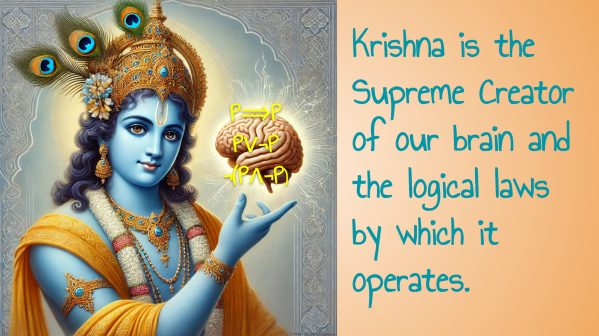
The question is familiar, almost worn out by repetition: If God is all-good and all-powerful, why does He allow evil and suffering? Why should a child be born into war, a mother bury her son, or a man be driven to despair by loneliness, disease, or betrayal? And if such things are real—and they are—then how can we claim that this world is governed by a benevolent and omnipotent God?

Continue reading “Why God Allows Evil: The Masochism of the Soul”

Self-Deception and Vaisnava Theology: Understanding the Soul’s Will to Forget

By Ajit Krishna Dasa

Why do we turn away from truths we already know deep inside? Vaiṣṇava theology describes self-deception not as innocent ignorance but as the soul’s conscious attempt to forget its eternal role as Kṛṣṇa’s servant. Out of envy and the desire for independence, we suppress reality, and māyā gently provides the illusions that make the lie livable. At our core, we still know Kṛṣṇa, yet on the surface we resist Him, creating contradictions—like atheists who rely on morality and reason that only make sense if God exists. This self-deception fuels saṁsāra, false philosophies, and even subtle ambition within spiritual life. But bhakti offers the cure: not gaining new knowledge, but removing the coverings that hide the truth we already carry. Through honesty, humility, and hearing from Śrīla Prabhupāda’s books, the soul’s real identity begins to shine again.

Continue reading “Self-Deception and Vaisnava Theology: Understanding the Soul’s Will to Forget”

A Vaisnava Response to The Problem of Divine Hiddenness

By Ajit Krishna Dasa

The claim that God is hidden from sincere seekers has become a central objection to theism in contemporary philosophy of religion. The argument suggests that if a perfectly loving God exists, He would ensure that all non-resistant individuals are aware of Him. The absence of such awareness is thus presented as evidence against God’s existence. Yet this objection presupposes a form of spiritual neutrality that the Vaiṣṇava tradition does not accept. According to Vaiṣṇava Vedānta, God is not absent—He is actively resisted. His apparent “hiddenness” is not a flaw in His nature, but a function of His personalism, His respect for the soul’s autonomy, and the moral and ontological conditions necessary for real relationship.

Continue reading “A Vaisnava Response to The Problem of Divine Hiddenness”

The Dangers of So-called Neutrality in Preaching

By Ajit Krishna Dasa

The Danger of Adopting an Atheistic Approach

In preaching, I often see devotees of Krishna unknowingly abandon our Vaisnava worldview in favor of an atheistic epistemology. This tends to happen when we engage with atheists or those who rely solely on sense perception and logic—what the Vedic teachings call the aroha-pantha (the ascending path). In such discussions, devotees sometimes concede to the atheistic claim that their aroha-pantha approach is neutral and, therefore, scripture cannot be accepted as proof.

Continue reading “The Dangers of So-called Neutrality in Preaching”

Atheists Observe Life but Fail to Account for It

By Ajit Krishna Dasa

One of the greatest failures of atheistic thought is that while atheists observe life all around them, they are unable to account for its origin in a coherent and consistent way. They assume life must have emerged from matter, yet they cannot demonstrate how or why this would happen. Their worldview fails to provide a foundation for explaining life itself. Materialistic scientists propose that life arises from non-life through random chemical reactions, but this claim remains speculative and unsupported by observable evidence. Srila Prabhupada repeatedly challenged this notion, emphasizing that life comes from life, not from dead matter.

Continue reading “Atheists Observe Life but Fail to Account for It”

The Fundamental Flaw of Atheism

By Ajit Krishna Dasa

Atheism has always been present in human society, but it is simply a sign of ignorance. The foolish conditioned soul thinks he is independent, but he does not realize that his very ability to think is controlled by the Supreme Lord. This book, 108 Problems with Atheism – According to Srila Prabhupada, will systematically expose the defects of atheistic philosophy using the divine knowledge of the Vedic scriptures.

Continue reading “The Fundamental Flaw of Atheism”

Atheistic or Theistic Veganism: Compassionate Confusion

By Ajit Krishna Dasa

You’ve got to hand it to vegans—most of them really care. They see the pain animals go through, they feel something deep inside, and they’re moved to action. That kind of empathy is rare in a world where people are often too distracted to care about anything but their own Netflix queue. From a Vaisnava perspective, this impulse to protect animals is beautiful. It’s a spark of the divine, a sign that there’s something deeper going on. But then, things start to unravel—big time—when atheism crashes the party. When you try to mix that compassion with atheism, things go sideways fast. It’s not going to work.

Continue reading “Atheistic or Theistic Veganism: Compassionate Confusion”

Website Powered by WordPress.com.

Up ↑